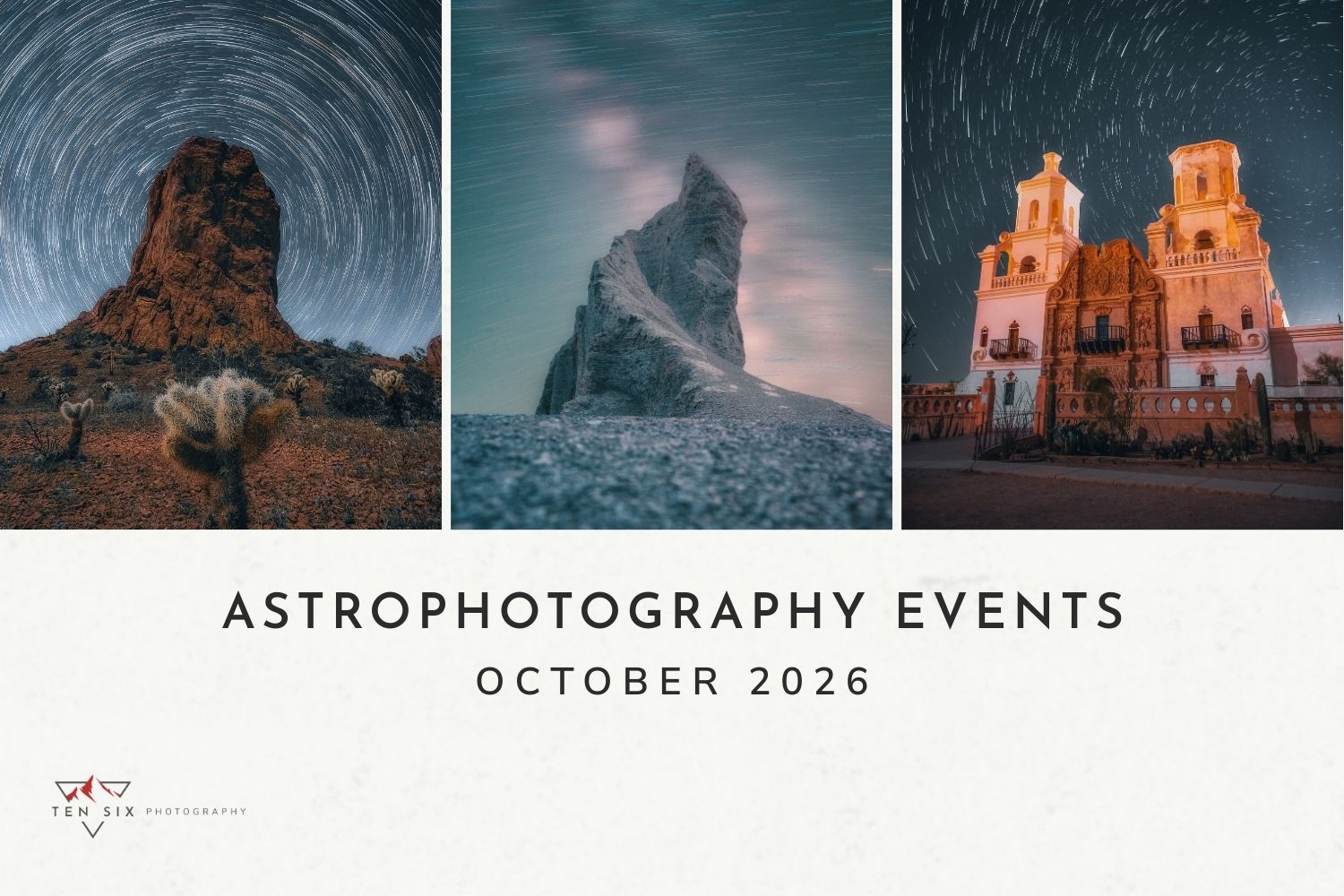
October favors planners. Milky Way opportunities fade, but moonlit landscapes, planetary events, and longer nights return. This is an excellent month for refining technique and exploring non-traditional night compositions.

meteor showers

October favors planners. Milky Way opportunities fade, but moonlit landscapes, planetary events, and longer nights return. This is an excellent month for refining technique and exploring non-traditional night compositions.

September signals a shift toward fall skies. Milky Way visibility begins to taper, but cooler nights, darker windows, and cleaner air make this a great month for disciplined shooting and creative compositions.

June presents a balance of challenges and rewards. Shorter nights require efficient planning, but extended Milky Way visibility and summer conditions create excellent opportunities for intentional, well-executed shoots.

May is where Milky Way season starts to feel real. Longer core visibility windows, warmer conditions, and fewer weather barriers make this an excellent month for wide-field nightscapes, panoramas, and multi-night projects.

March is a transition month for astrophotography, balancing winter darkness with the first real signs of seasonal change. With a dramatic total lunar eclipse early in the month and a strong New Moon window shortly after, March rewards photographers who can shift gears, moving between lunar-focused shooting, dark-sky work, and early Milky Way planning. It’s a month where flexibility matters, and preparation begins turning into execution.

February is a dark-sky opportunity in the heart of winter. With one of the best New Moon windows of the season, this month rewards photographers who plan carefully, choose their nights intentionally, and focus on clean execution rather than chasing every event. It’s a time to refine workflows, take advantage of truly dark skies, and quietly prepare for the momentum of spring Milky Way season.

January is a foundational month for astrophotography. Long winter nights, stable air, and fewer distractions make it ideal for refining technique, planning future shoots, and taking advantage of dark-sky windows, lunar photography, and meteor activity.